On this page
Siem Reap has a full day of things that cost nothing, and almost none of them are at the temples. The riverside, the Royal Gardens and their fruit bats, three working pagodas, a craft workshop with a free tour, four markets and Pub Street at night all have no ticket. Angkor itself is not on that list. The pass costs $37 a day, and the one free evening it offers depends on buying it.
Lists of free things in Siem Reap tend to mix three kinds of entry. Some places are genuinely free. Some are free to enter but paid for another way, by a shop at the end of the tour or a meal under the dance floor. And some are not free at all, such as Phnom Krom or the West Mebon, which sit inside the Angkor Pass. This guide sorts them, gives the hour each one works best, and adds the transport line that every “free” day still has. It fits inside the Siem Reap daily budget guide, which sets the rest of the costs.
Prices, hours and transport times below were checked against operator websites and official sources in November 2026.
Free, Free With a Catch, and Not Free
The useful distinction is who pays for the thing. A pagoda is kept by its monks and the donations of Cambodian families. The riverside and the Royal Gardens are public land. Those are free in the plain sense, and a small donation at a pagoda is the only courtesy expected.
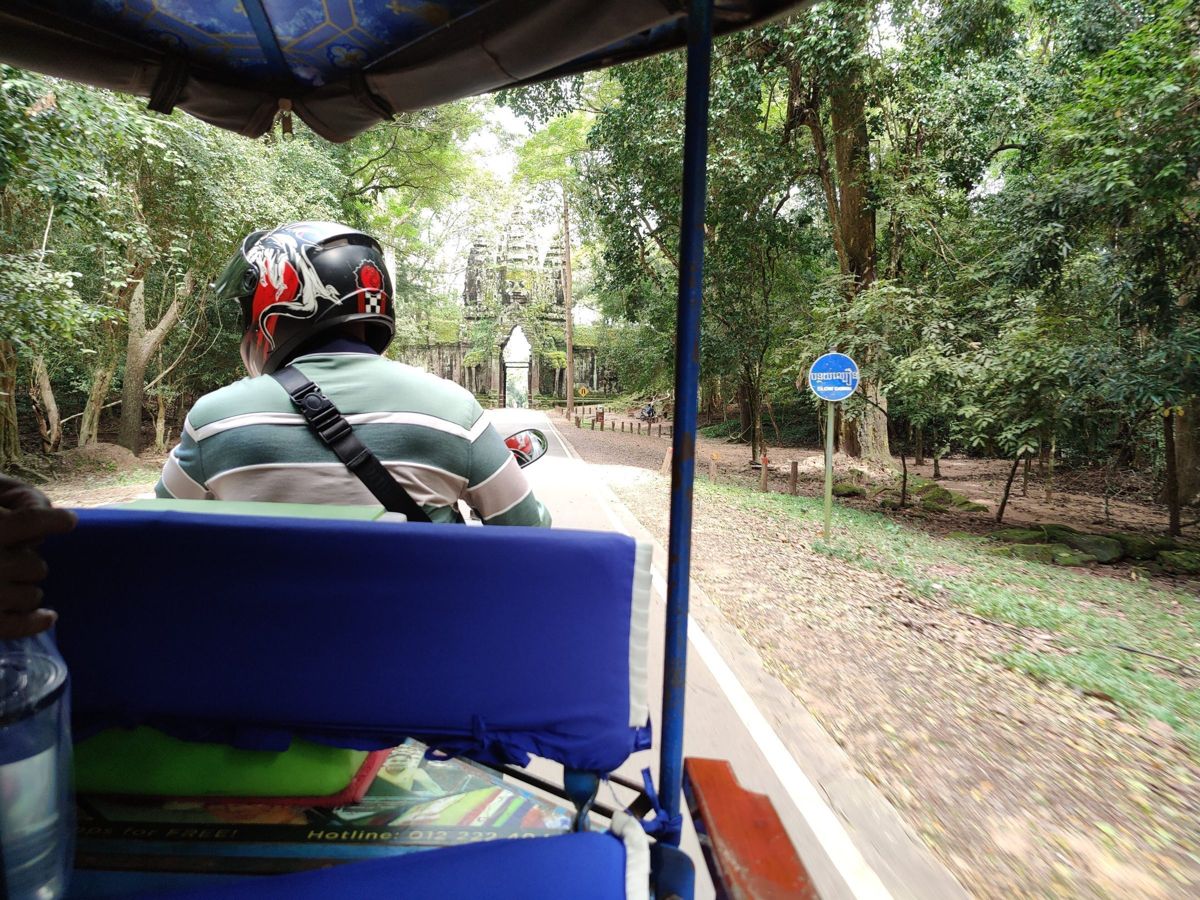
The second group is free at the door and paid for elsewhere. Artisans Angkor’s workshop tour ends in the shop that funds it. Temple Balcony’s dance program is free for diners, so the price is dinner. A tuk-tuk driver who offers a “free” ride usually earns a commission at a shop or restaurant, and the ride ends there. None of this is a scam. It is a business model, and it helps to know which one is in play before walking in.
The third group is the one that costs money by surprise. Phnom Krom, the hill temple south of town, is covered by the Angkor Pass. The island temple of the West Mebon needs the pass too, although the beach on the West Baray dike does not. Theam’s Gallery is listed at $5 for foreigners. Children under 12 enter the Angkor park free, which is the largest real saving in Siem Reap for a family.
The River and the Royal Gardens
The riverside walk
The verdict: the best free hour in town, at either end of the day. The west-bank path follows Pokambor Avenue for about 1.2 km from the Old Market bridges to the Royal Independence Gardens, roughly 15 minutes on foot without stops. It passes Wat Preah Prom Rath halfway, then the gardens and the shrine at the north end. Walk it between 7:00 and 9:00 a.m., or from about 4:30 p.m. to sunset, which falls around 5:34 p.m. in mid-November and 5:40 p.m. in mid-December. The riverside walk guide gives the full route and a return loop down the east bank. The limitation: from March to May the path has little shade between 11:00 a.m. and 3:00 p.m., and it is a walk along a hot road.
The Royal Independence Gardens and the bats
The verdict: free, open 24 hours, and the one place in the center where wildlife is the attraction. The tall trees in the gardens have long held a colony of large fruit bats, and Google reviews from June and July 2026 still describe them hanging near the shrine. They show as dark shapes in the canopy by day and stir at dusk. Nobody publishes a count. The limitation: the gardens are unlit and nearly empty after 10:00 p.m., so walk back along the road rather than across the lawns.
The shrine of Preah Ang Chek Preah Ang Chorm
The verdict: the shrine that matters most to Siem Reap residents, and free to watch. Two bronze statues, rediscovered in 1950 in the forest around Angkor Thom, are worshipped in a small shrine by the gardens, built from 1982. Cambodian families and newlyweds bring incense and lotus buds, especially in the late afternoon and during festivals. Visitors may watch quietly from the edge, with shoulders and knees covered. The limitation: it is a place of prayer, not a monument, and there is nothing to tour once the statues have been seen.
The Pagodas
Siem Reap’s pagodas are working monasteries with monks in residence, and none charges entry. The rules are those of a place of worship, set out in full in the temple etiquette guide. Cover shoulders and knees, remove shoes before entering a vihara, sit with feet pointed away from the Buddha, and women should not touch a monk or hand him anything directly. The best hours are 8:00 to 11:00 a.m. and after 3:00 p.m., outside the monks’ midday meal.
Wat Bo
The verdict: the pagoda with the most to see, ten minutes on foot from the Old Market. Wat Bo is a working monastery on Wat Bo Road on the east bank. Its vihara holds murals of the Reamker, the Khmer Ramayana, that guidebooks date to the late 19th century. Entry is free, donations are welcome and no hours are published. The Wat Bo area guide puts it in its neighborhood. The limitation: the murals are faded in places, and the hall may be closed during ceremonies.
Wat Preah Prom Rath
The verdict: the pagoda to stop at on the riverside walk. It sits halfway along Pokambor Avenue, between the Old Market and the Royal Gardens. Its history is dated to the turn of the 16th century, while its buildings are from the 1940s and 1950s. Inside are painted walls showing the life of the Buddha, a seated Buddha and a reclining Buddha, and the courtyard holds a model of the boat from the legend of the monk Preah Ang Chong Han Hoy. No hours or prices are published. The limitation: accounts of the legend differ, and nobody on site explains it in English.
Wat Thmei
The verdict: the free visit that explains the Khmer Rouge years in Siem Reap, and a serious one. Wat Thmei, on Charles de Gaulle Boulevard on the road toward Angkor, is a working pagoda that served as a Khmer Rouge prison. An estimated 8,000 people died there. Since a renovation in 1995, bones have been kept in a glass stupa, beside an exhibition by the Documentation Center of Cambodia. Listings describe entry as free, and no official hours exist. The limitation: it is a memorial, not an outing for young children, and photographs of the remains are inappropriate.
Workshops and Markets
Artisans Angkor craft center
The verdict: the best free tour in town, with an honest shop at the end. The workshops on Stung Thmey Street, about five minutes on foot west of the Old Market, open daily from 7:30 a.m. to 6:00 p.m. A guide walks visitors past stone and wood carvers, lacquer and silver workshops, and explains each craft. No booking is needed. The tour ends in the shop, which funds it, and visitors report no pressure to buy. The Artisans Angkor guide compares the town workshops with the silk farm. The limitation: shop prices reflect hours of skilled work and are well above market-stall rates.
Angkor Silk Farm
The verdict: free to visit, not free to reach. The silk farm in Puok, 16 km west on National Road 6, opens daily from 7:30 a.m. to 5:30 p.m. Its 40- to 50-minute visit follows silk from mulberry and silkworm to loom. Listings from 2026 describe it as free with no entrance fee and mention a free shuttle from the town workshops. The official site publishes neither a price nor a shuttle. A tuk-tuk round trip with waiting time costs $15 to $20. The limitation: without the shuttle, the transport costs more than many paid attractions, so call the farm before going.
The Old Market and Psar Leu
The verdict: free to walk, and the cheapest breakfast in town. Psar Chas, the Old Market, is two minutes from Pub Street. Its food counters serve bai sach chrouk, kuy teav and num banh chok for $1 to $2 a plate from about 6:00 a.m. Psar Leu, the main wet market on National Road 6, opens at 3:00 to 4:00 a.m. and is best before 8:00 a.m. A return tuk-tuk costs $4 to $6. The Siem Reap markets guide covers both. The limitation: Psar Leu’s wet section is crowded, wet underfoot and not for the squeamish.
The night markets
The verdict: free to browse, and each one has a different job. The Siem Reap Art Center Night Market, on the east bank at the footbridge opposite the Old Market, opens Monday to Saturday from 4:00 to 11:00 p.m. and closes on Sundays. The Phalla Angkor Night Market, off Sivatha Boulevard, opens daily from 4:30 p.m. to midnight. The Road 60 night market, near the Angkor Enterprise ticket office, is where Siem Reap families eat, with grills running from about 4:00 p.m. A tuk-tuk from Pub Street takes about 15 minutes and costs about $3 each way. The street food guide covers what to eat there. The limitation: the souvenir markets sell the same goods stall after stall, and the original Angkor Night Market’s status in 2026 is uncertain.
Made in Cambodia Market
The verdict: the free browse with the best quality, from noon. Made in Cambodia Market on Oum Khun Street sells only Cambodian-made goods from about 20 vendors, daily from noon to 6:00 p.m., with some stalls open until 8:00 p.m. Prices are fixed. The souvenir guide explains how to tell its hand-woven kramas from the polyester ones at the Old Market. The limitation: it is closed in the morning, and fixed prices mean no bargaining.
Evenings for Nothing
Pub Street
The verdict: free to walk, and expensive only by the hour. Street 8 is closed to motor traffic every evening, and bars open officially at 5:00 p.m. Walking from end to end and back takes ten minutes, and draft beer is advertised at $0.50 to $0.75 a glass along the street. The Pub Street guide covers the street block by block. The limitation: the risks are on the streets around it, mostly bag and phone snatching from passing motorbikes.
Temple Balcony’s dance program
The verdict: the only dance program in town that costs no more than dinner. Temple Balcony is the dining floor above Temple Club, in the middle of Pub Street. A local directory updated in December 2025 lists the program daily from 7:30 to 9:30 p.m., free for diners who order food and drink, with mains at $5 to $8. The Apsara dance guide compares it with the seated shows. The limitation: recent reviews describe the kitchen as uneven, and the club downstairs gets louder as the evening goes on.
The Water Festival, while it lasts
The verdict: the largest free event of the year, ending this week. The 2026 Water Festival runs on the Siem Reap River from November 20 to 25, with boat races on November 23 and 24 and events at the Royal Residence Park. The Bon Om Touk guide covers the program and the dates for 2027. The limitation: the banks are packed with Cambodian visitors, roads close and tuk-tuks crawl.
Free at Angkor, Within the Rules
The 4:45 p.m. sunset
The verdict: the one free visit to the temples, and it requires buying a pass. Angkor Enterprise’s FAQ says that a one-day ticket for the next day, bought after 4:45 p.m., allows entry the same evening for sunset. That evening does not count as a pass day. Buy tomorrow’s pass at the Road 60 ticket office, open 5:00 a.m. to 5:30 p.m., or online with tomorrow’s date, then ride to Pre Rup or Phnom Krom. The Angkor Pass guide explains the rule and the sunset spots guide the choices. The limitation: it only works if tomorrow is a temple day.
Children under 12
The verdict: the largest saving in Siem Reap for a family. Children under 12 enter the Angkor Archaeological Park free and need no ticket. Staff may ask for a passport as proof of age, and a photocopy or a phone photo is not always accepted. From the twelfth birthday, a child pays the full adult price. The Angkor with kids guide plans the day around it. The limitation: visitors under 12 may not climb the Bakan, the upper tier of Angkor Wat.
The West Baray beach
The verdict: a free afternoon where Siem Reap families swim. The south dike of the West Baray, toward its western end, fills with picnic huts, hammocks and food stalls on weekends. Travel guides describe the beach as free, with no pass check. Vendors charge for food, drinks, hammocks and inner tubes. The West Mebon guide covers the reservoir and the island temple, which does need a pass. The limitation: there is no lifeguard and no published water-quality data.
By Situation
You have one free afternoon in town
Start at Artisans Angkor at 2:30 p.m., walk to Wat Preah Prom Rath, continue up the riverside to the Royal Gardens by 4:30 p.m., and come back down to the Old Market at dusk. Total cost: nothing, plus a drink.
You are on a backpacker budget
Breakfast at the Old Market counters for $1 to $2, a morning at Wat Bo, the Artisans Angkor tour at midday, and the Road 60 night market for dinner. The daily budget guide shows where this fits in a $30 day.
You are traveling with children under 12
Plan the temple days without a pass for the children, carry their passports, and use the Royal Gardens bats and the Old Market as the free town afternoon. The Siem Reap with kids guide adds the paid options.
You want to understand modern Cambodia
Wat Thmei is free and close to town. Pair it with the Cambodia Landmine Museum, $7 for foreign adults and free under 13, or the APOPO Visitor Center, $10 and free under 10, both covered in the Landmine Museum and APOPO guide.
You have a pass starting tomorrow
Buy it after 4:45 p.m. today and take the free sunset at Pre Rup or Phnom Krom. The Phnom Krom guide gives the timing for the hill.
What It Actually Costs
A free day in Siem Reap still has a transport line. A tuk-tuk across the center costs $2 to $3, so two short rides add $4 to $6. Dollars are accepted everywhere, with change under $1 given in riel.
| Item | Price | Notes |
|---|---|---|
| Riverside walk, Royal Gardens, shrine | Free | Gardens open 24 hours |
| Wat Bo, Wat Preah Prom Rath, Wat Thmei | Free | A $1 to $2 donation is usual |
| Artisans Angkor workshop tour | Free | Daily 7:30 a.m. to 6:00 p.m. |
| Angkor Silk Farm visit | Free, according to 2026 listings | Tuk-tuk round trip $15 to $20 |
| Old Market, Psar Leu, night markets | Free to enter | Market breakfast $1 to $2 a plate |
| Temple Balcony dance program | Free for diners | Mains $5 to $8 |
| Sunset on tomorrow’s pass | Free evening | One-day pass $37 |
| Children under 12 at Angkor | Free | Passport may be requested |
| Phnom Krom, West Mebon island | Not free | Angkor Pass required |
| Theam’s Gallery | $5 for foreigners | Daily 8:00 a.m. to 5:00 p.m. |
| Angkor National Museum | Not free | Price not published, $12 in 2026 listings |
| Tuk-tuk across the center | $2 to $3 | Agree the fare first |
The money guide covers small notes and riel change, and the tipping guide covers what a free tour guide might reasonably expect, which is usually nothing at Artisans Angkor.
What Other Guides Get Wrong
- “Phnom Krom is a free sunset.” It is an Angkor-period temple on the Angkor Pass. Some visitors report no check, others are stopped halfway up the stairs. Tomorrow’s pass bought after 4:45 p.m. is the reliable way in.
- “Theam’s Gallery is free.” Several listings say so, and they disagree on the hours. Other listings give a $5 entry for foreigners, daily from 8:00 a.m. to 5:00 p.m. Carry $5 and ask at the gate.
- “The silk farm has a free shuttle.” Travel sites still list one at 9:30 a.m. and 1:30 p.m. The official Artisans Angkor site no longer mentions it, so call before planning on it.
- “Visit an orphanage, it costs nothing.” A free visit to children is the most harmful item on any free list. The orphanage tourism guide explains why child-protection groups ask visitors to stay away.
- “You can see Angkor Wat for free at dusk.” The 2024 reform moved pass checks from the roads to the temple entrances, not away. The scan at Angkor Wat is on the west causeway, and the pass is required.
- “The free tuk-tuk ride.” A driver offering a free ride is usually paid by the shop or restaurant at the end of it. Agree a fare of $2 to $3 and choose the destination.
Addresses, hours, prices and transport times checked against operator websites and official sources in November 2026. Hours change seasonally and prices change often. Confirm anything time-critical with the operator.
Where to Go Next
The Siem Reap daily budget guide puts these free hours inside a full day’s costs, and the Angkor Pass guide covers the one ticket worth paying for. For the town itself, the riverside walk and the Wat Bo area guide are the two best free routes. The evening shows guide covers what to pay for after dark.
Addresses, hours, prices and transport times checked against operator websites and official sources in November 2026. Hours change seasonally and prices change often. Confirm anything time-critical with the operator. Found an error? Tell us and the guide's review date will be updated.
Frequently Asked Questions
What can you do for free in Siem Reap?
Walk the riverside from the Old Market to the Royal Independence Gardens, look for the fruit bats in the garden trees, visit the working pagodas of Wat Bo, Wat Preah Prom Rath and Wat Thmei, take the free workshop tour at Artisans Angkor on Stung Thmey Street, and browse the Old Market, Psar Leu, the Art Center Night Market and Made in Cambodia Market. In the evening, Pub Street and the Road 60 night market cost nothing to walk. Temple Balcony on Pub Street lists a free Apsara dance program for diners. Every pagoda visit needs covered shoulders and knees.
Can you see Angkor Wat for free?
Not legally as a foreign adult. The Angkor Pass costs $37 for one day, $62 for three days and $72 for seven days, and it is scanned at the entrance to every major temple, including the west causeway of Angkor Wat. Children under 12 enter free with a passport as proof of age. The one honest way to add a free visit is the 4:45 p.m. rule: a one-day pass dated for tomorrow and bought after 4:45 p.m. admits the holder the same evening for sunset, according to Angkor Enterprise's FAQ. That evening does not count as a pass day.
Is the Artisans Angkor tour really free?
Yes. The guided tour of the workshops on Stung Thmey Street costs nothing and runs daily from 7:30 a.m. to 6:00 p.m., without a booking. A guide walks visitors past the stone carvers, wood carvers, lacquer and silver workshops and explains each craft. The tour ends in the shop, which is how it is paid for. Nobody is required to buy, and visitors report no pressure. The silk farm in Puok, 16 km west, is also described as free by 2026 listings, but the official site publishes no price and no shuttle, so call before riding out.
Are there free Apsara dance shows in Siem Reap?
Free with dinner, yes. Temple Balcony, the dining floor above Temple Club on Pub Street, lists a dance program daily from 7:30 to 9:30 p.m. for diners who order food and drink, according to a local directory updated in December 2025. Mains are $5 to $8. The cost is the meal, and the setting is a Pub Street restaurant with a club downstairs. A seated show with a set menu, such as Kanell at $29 to $36 for dinner, is a different evening. No theater in Siem Reap stages a free public dance performance on a fixed schedule.
Is the Siem Reap night market free?
Entry is free at all of them. The Siem Reap Art Center Night Market, on the east bank opposite the Old Market, opens Monday to Saturday from 4:00 to 11:00 p.m. and closes on Sundays. The Phalla Angkor Night Market, off Sivatha Boulevard, opens daily from 4:30 p.m. to midnight. The Road 60 night market, near the Angkor Enterprise ticket office, is the local one, with grills from about 4:00 p.m. A tuk-tuk to Road 60 costs about $3 each way. The original Angkor Night Market's status in 2026 is uncertain.
Is it free to visit pagodas in Siem Reap?
Yes. Wat Bo on the east bank, Wat Preah Prom Rath on Pokambor Avenue and Wat Thmei on Charles de Gaulle Boulevard have no ticket office and publish no hours. A donation box sits near the main hall, and a dollar or two is the usual gift. These are working monasteries. Cover shoulders and knees, take shoes off before stepping into a vihara, keep feet pointed away from the Buddha and from monks, and women should not touch a monk or hand him anything directly. Visit between 8:00 and 11:00 a.m. or after 3:00 p.m.
More Budget, Money & Practical guides
Start with the pillar guide: What Siem Reap Costs Per Day: Backpacker, Mid-Range and Comfortable Budgets Line by Line (2026).
-
-
-