On this page
Preah Khan is the best temple most Angkor visitors only half see. It sits five minutes north of Angkor Thom at the start of the grand circuit, it is larger than Ta Prohm and quieter, and it is usually given 30 minutes on a loop planned around something else. Neak Pean and Ta Som, the next two stops, get even less. All three were built under Jayavarman VII in the late 12th century, and they read best as one morning.
Most advice online treats these three as a list of names to tick between Angkor Thom and Pre Rup, with a photo each. It leaves out what decides the visit: Preah Khan is 800 m across and needs a pickup on the far side, Neak Pean is seen from a walkway and not from the island, and Ta Som’s famous gate is at the back. Timing matters too, because the three temples sit in the order of the morning light. This guide sits under the Angkor Pass guide, which sets the ticket rules for the whole park, and details the northern half of the small and grand circuit guide.
Prices, hours and transport times below were checked against operator websites and official sources in November 2026.
The Trap: A 30-Minute Stop at a 56-Hectare Temple
The grand circuit is about 26 km. Drivers run it clockwise from the north gate of Angkor Thom, and the loop ends at Pre Rup for sunset. On that plan, the first temples of the day get the hottest hours or the last of a tired visitor’s energy. Preah Khan becomes a walk in and out of the west gate.
That misses most of it. Preah Khan’s outer enclosure measures about 800 m by 700 m, or 56 hectares, inside a moat. The temple is built along one east-west axis, and the reasons to come are spread along it: the eastern causeway, the Hall of Dancers, the round-columned building, the central shrine and the long western approach. A visitor who enters and leaves by the same gate sees half the corridor twice.
The fix is simple and costs nothing. Start the grand circuit at Preah Khan at opening, tell the driver to drop you at one gate and collect you at the other, and give the temple an hour or more. Neak Pean and Ta Som follow in ten minutes of driving, and the whole group is done before the heat.
Preah Khan
What it is
The honest verdict: the best temple on the grand circuit and one of the best in the park, for anyone on a second or third day. Jayavarman VII built Preah Khan to honor his father, Dharanindravarman II. Its foundation stele, found in 1939 by the French conservator Maurice Glaize, records the consecration of the main image in 1191. The original name was Nagara Jayasri, “holy city of victory.” Preah Khan is usually translated as “holy sword.”
It was a working city as much as a temple. The stele lists 97,840 attendants and servants, including 1,000 dancers and 1,000 teachers, and shrines to 430 other deities. Treat those figures as royal record-keeping, not a census. They still explain the scale.
The walk, east to west
The east side is the original front. A causeway lined with figures carrying a naga leads from the direction of the Jayatataka reservoir to the eastern gate. Beyond it, on the main axis, is the Hall of Dancers, its walls carved with rows of apsaras. North of the hall stands a two-story building with round columns. No other example survives at Angkor, and its purpose is unknown. Granary and ritual hall are both proposed.
The axis then narrows through doorways that get smaller as you go, toward a central shrine that now holds a stupa. Trees grow through the outer enclosures and over some walls. The laterite outer wall carries 72 large garudas, one about every 50 m, and the corner ones are the best preserved.
Facts
- Location: north of Angkor Thom, the first temple on the grand circuit. About 25 minutes by tuk-tuk from Pub Street.
- Hours: 6:00 a.m. to 6:30 p.m., according to Angkor Enterprise’s opening hours for the grand circuit.
- Ticket: Angkor Pass, checked at the entrance.
- Time needed: 60 to 90 minutes walked through. A 2026 visitor guide suggests 90 minutes to two hours for the full temple.
- Entrances: east, west and north. The south gate is not used by visitors, according to the same 2026 guide.
- Facilities: food stalls and toilets opposite the west entrance.
State of the temple
The World Monuments Fund has worked at Preah Khan since 1991. Its approach was to stabilize, not rebuild, and much of the temple remains collapsed stone in the outer enclosures. Visitors who expect the rebuilt look of Angkor Wat find rubble fields and propped doorways. APSARA restored the eastern terrace in 2022 and was working on the landing stage by the reservoir in 2023.
The limitation: it is a long walk between gates, and the paths are uneven stone and packed earth. Agree the pickup gate before getting out of the tuk-tuk.
Neak Pean
What it is
The honest verdict: a short, unusual stop that works only in the right frame of mind. Neak Pean means “entwined serpents,” after the two nagas coiled around the base of its shrine. It stands on a round island in the center of the Jayatataka, the reservoir Jayavarman VII built east of Preah Khan, about 3.6 km long and 0.9 km wide. Around the island are four smaller pools arranged in a cross.
The design is about water and healing. Scholars link it to Anavatapta, a mythical Himalayan lake whose waters were believed to cure illness. Water from the main pool ran into the four side pools through spouts carved as an elephant, a lion, a horse and a human head. In the main pool stands the stone horse Balaha, a form of the bodhisattva Avalokiteshvara rescuing shipwrecked sailors, with figures clinging to its sides.
Facts
- Location: about 10 minutes by tuk-tuk east of Preah Khan, on the grand circuit.
- Hours: 6:00 a.m. to 6:30 p.m.
- Ticket: Angkor Pass.
- Time needed: 15 to 20 minutes, most of it on the walkway.
- Access: a walkway across the reservoir leads to the edge of the pools. The central island and pools are closed to visitors.
Recent work
APSARA began restoring the stairs and floors around the eastern, northern and western shrines in May 2024, citing erosion, seepage and plant growth. In May 2025 it reported the western drainage structure finished, completing the restoration of the pool system. In the rainy season and early dry season the walkway crosses open water. Later in the dry season the reservoir level drops.
The limitation: there is nothing to enter and no shade, and the shrine is seen from a distance of several meters. Visitors expecting a temple to walk through find a viewpoint.
Ta Som
What it is
The honest verdict: the quietest of the three, and the reason many people bring a camera on the grand circuit. Ta Som is a small temple of Jayavarman VII’s reign, dedicated like Preah Khan to his father Dharanindravarman II. Its outer enclosure measures about 240 m by 200 m. Face towers like those of the Bayon stand over its gates.
The eastern outer gate is held by a fig whose roots have grown down through the stone blocks and into the ground. A German heritage documentation site reported in 2021 that the tree died in the 1970s and still stands, held by the stone around it, and expected it to fall eventually. It is the same tree-and-stone image as Ta Prohm, without the queue for the photo.
Facts
- Location: about 2 km east of Neak Pean, a few minutes by tuk-tuk.
- Hours: 6:00 a.m. to 6:30 p.m.
- Ticket: Angkor Pass.
- Time needed: about 30 minutes.
- Restoration: the World Monuments Fund added Ta Som to its program in 1998, and in 2007 it cleared and documented the site with APSARA so it could be entered from all four sides.
The limitation: drivers stop at the west gate, and the fig is at the eastern gate, on the far side. Walk straight through the temple and out the back, then return.
The Order and the Hour
The three temples sit in the right order for the morning. Preah Khan faces east, like most temples at Angkor, and its east causeway takes the low sun in the first two hours after opening. Neak Pean and Ta Som follow between about 8:30 and 10:00 a.m. East Mebon, an open platform with almost no shade, is the last stop before the heat, and it is hot by 10:30 a.m. in any month. The full reasoning by temple is in the best time of day for each Angkor temple.
A workable morning in November to February:
| Time | Stop | Note |
|---|---|---|
| 6:45 a.m. | Leave Pub Street | About 25 minutes to Preah Khan |
| 7:10 a.m. | Preah Khan, east gate | Walk through to the west gate, 60 to 90 minutes |
| 8:40 a.m. | Neak Pean | 15 to 20 minutes |
| 9:10 a.m. | Ta Som | About 30 minutes, walk to the eastern gate |
| 9:50 a.m. | East Mebon | 30 to 45 minutes, no shade |
| 10:40 a.m. | Back to town or on to Pre Rup | Pre Rup can be saved for sunset |
From March to May, start at 6:00 a.m. and finish by 10:00 a.m. Between 11:00 a.m. and 3:00 p.m. in those months, no temple with open terraces is a safe place to stand. In the rainy season, from May to October, mornings are usually dry and the reservoir at Neak Pean is full.
The afternoon alternative is the reverse loop. Ta Som and Neak Pean are open and quiet late in the day, and Preah Khan’s west side catches the afternoon light. That suits the two-day itinerary, which uses one afternoon for these temples.
Dry Season and Rainy Season
The three temples change less with the season than the Tonle Sap does, but they do change. From November to February, highs sit near 31°C and dawns near 20°C, and Preah Khan’s shaded corridors stay bearable even at noon. This is the season with the most visitors, though the grand circuit remains far calmer than the small circuit at the same hour.
From March to May, the heat decides the plan. The open walkway at Neak Pean and the terraces of East Mebon are the hardest stretches, so the morning has to end by 10:00 a.m. Preah Khan’s trees give some cover, Ta Som’s courtyards very little.
From May to October, the rainy season fills the Jayatataka, and Neak Pean looks the way it was designed to look, a shrine in the middle of water. Paths at Preah Khan turn to mud after a storm and the stone gets slippery, so wear shoes with grip. Showers usually come in the afternoon, which is one more reason to visit in the morning.
The Rest of the Loop: East Mebon and Pre Rup
After Ta Som, the grand circuit turns south across the dry bed of the East Baray. East Mebon is a tenth-century temple-mountain that once stood on an island in that reservoir, with life-size stone elephants at the corners of its terraces. It takes 30 to 45 minutes and has almost no shade, which is why the Banteay Samre and East Mebon guide moves it to an early or late half day of its own.
Pre Rup, a brick temple-mountain of the same century, comes next. It opens from 5:00 a.m. to 7:00 p.m. and is the standard sunset temple, so many travelers stop at East Mebon in the morning, return to town for lunch and come back to Pre Rup at the end of the day. The ride back to central Siem Reap from the eastern end of the loop takes 30 to 35 minutes.
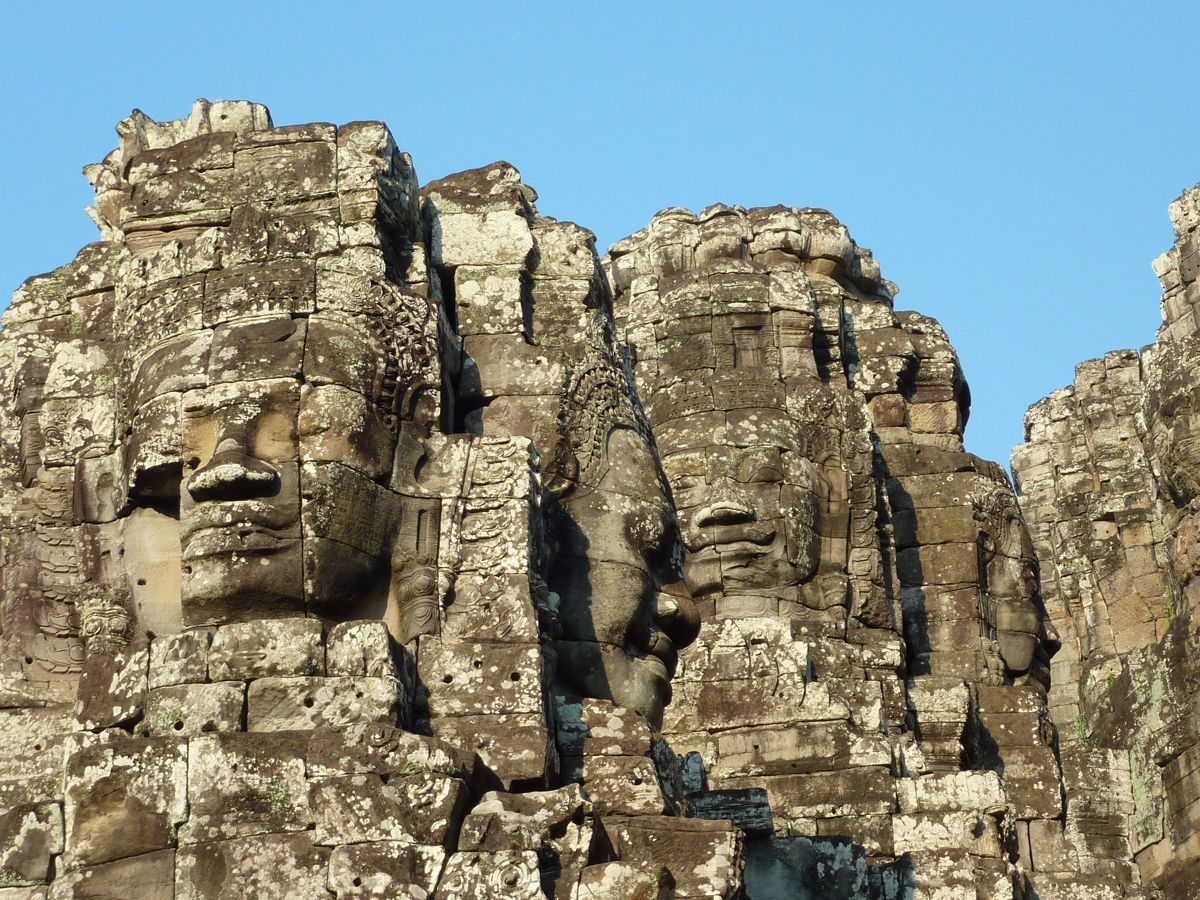
Read in this order, the loop is a lesson in two centuries of building. East Mebon and Pre Rup are the older royal temple-mountains. Preah Khan, Neak Pean and Ta Som are the late Buddhist foundations of the same king who built the Bayon in Angkor Thom, and the face towers over Ta Som’s gates are the link.
By Situation
You have one day at Angkor
Skip them, or give Preah Khan 30 minutes on the way back from Angkor Thom. Angkor Wat, the Bayon and Ta Prohm come first. How many days Angkor needs sets out the trade-off.
You have a three-day pass
Give the second morning to the grand circuit and start it here at 7:00 a.m. The three-day Siem Reap itinerary builds this day in. Keep Banteay Srei for the third morning.
You found Ta Prohm too crowded
Preah Khan is the answer. It has the same kind of tree-grown corridors on a larger scale, and at 7:00 a.m. the groups are still on the small circuit. Ta Som’s eastern gate gives the root-and-stone photograph. Ta Prohm’s guide explains what makes the two different.
You are traveling with children
Preah Khan’s straight corridor of shrinking doorways works for children over eight, and the walk has a clear start and end. Neak Pean is short enough to keep. Bring water and keep them out of the sun on the walkway. More detail is in Angkor with kids.
You want a guide for one morning
This is a good morning to hire one. Preah Khan’s carvings and the story of Neak Pean’s pools make little sense without context, and a licensed Angkor guide costs about $40 a day for English.
What It Actually Costs
| Item | Cost | Notes |
|---|---|---|
| Angkor Pass, one day | $37 | Three-day $62, seven-day $72. Under 12 free with a passport |
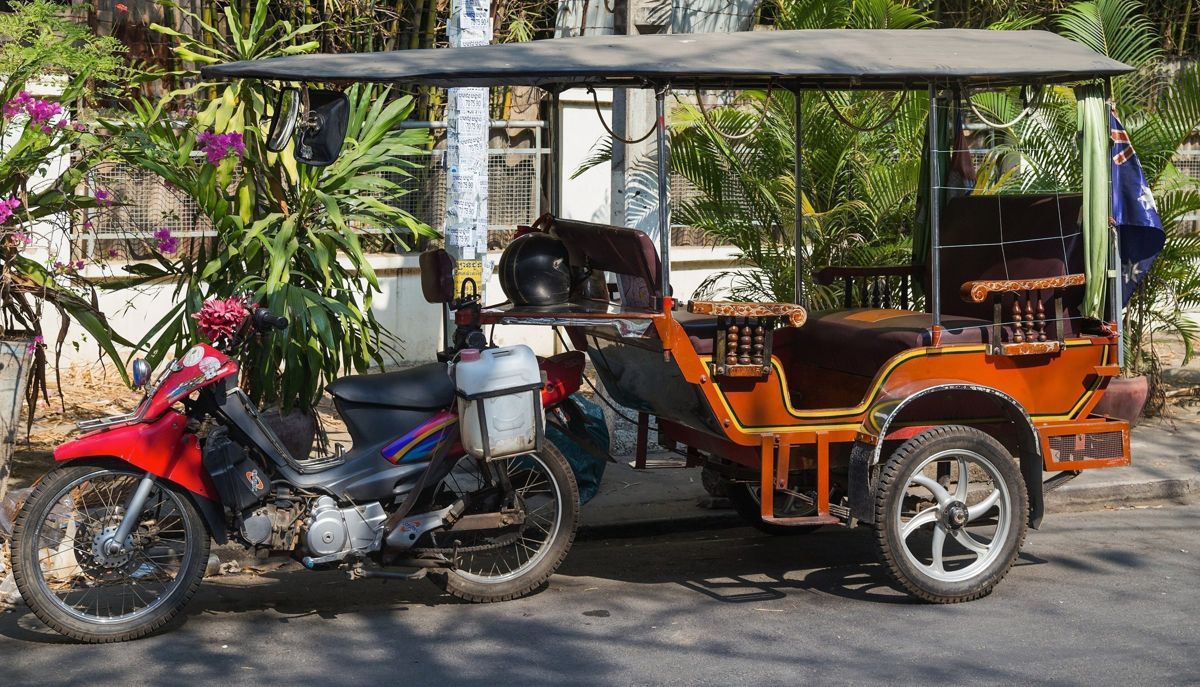
| Tuk-tuk, grand circuit day | About $25 to $35 | No official fare. Agree the route and the pickup gate first |
| Licensed guide, English | About $40 a day | Other languages cost more |
| Water and coconuts at stalls | A few dollars | West side of Preah Khan and at Neak Pean’s car park |
| Separate tickets | None | All three are inside the Angkor Pass |
Pay drivers and stalls in dollars and expect small change in riel. Torn notes are refused. The money guide covers ATMs and cards, and tipping in Cambodia covers what to give a driver at the end of a long loop.
Shoulders and knees must be covered at all three temples, as everywhere in the park. The Angkor dress code has the detail, and what to pack covers hats and water for the open stretches.
What Other Guides Get Wrong
- They give Preah Khan 30 minutes. It covers 56 hectares, and walking the axis through takes an hour at least.
- They send visitors in and out by the same gate. The useful plan is a drop at one gate and a pickup at the other, agreed in advance.
- They suggest walking to Neak Pean’s central shrine. The island and the pools are off limits. The visit is from the walkway.
- They describe Neak Pean as dry. The Jayatataka holds water in the rainy season and through the early dry season, and APSARA has restored the pool system since 2024.
- They put the Ta Som fig at the entrance. It is on the eastern gate, at the back from where drivers stop.
- They schedule the grand circuit for the afternoon by default. These three temples are morning temples, and the circuit is calm at 7:00 a.m. even in late December, when the small circuit is at its fullest. The December and January guide covers the peak weeks.
Addresses, hours, prices and transport times checked against operator websites and official sources in November 2026. Hours change seasonally and prices change often. Confirm anything time-critical with the operator.
Where to Go Next
Start with the Angkor Pass guide to choose a pass, then the small circuit and grand circuit guide to see where this morning fits in the loop. The Angkor sunset spots cover Pre Rup, the usual end of the grand circuit day, and getting around Angkor by tuk-tuk, car or bike explains how to book the driver for it. For a third morning, West Mebon and the West Baray shows the other side of Angkor’s water system.
Addresses, hours, prices and transport times checked against operator websites and official sources in November 2026. Hours change seasonally and prices change often. Confirm anything time-critical with the operator. Found an error? Tell us and the guide's review date will be updated.
Frequently Asked Questions
Is Preah Khan worth visiting?
Yes, for anyone with more than one day at Angkor. Preah Khan is a monastery-city of 56 hectares built by Jayavarman VII and dated by its stele to 1191. It has the long tree-shaded corridors that draw people to Ta Prohm, with a fraction of the visitors, plus a Hall of Dancers carved with apsaras and a two-story building with round columns that has no surviving equivalent at Angkor. It is worth it on a second or third morning. On a single day that has not yet covered Angkor Wat, the Bayon and Ta Prohm, it comes after them.
How long do you need at Preah Khan, Neak Pean and Ta Som?
Plan on about three hours for the three, including the tuk-tuk rides between them. Preah Khan takes 60 to 90 minutes if walked from the east gate through to the west gate. Neak Pean takes 15 to 20 minutes, most of it on the walkway over the reservoir. Ta Som takes about 30 minutes, including the walk through to its eastern gate. Adding East Mebon and Pre Rup, the rest of the grand circuit, makes a full morning that starts at 7:00 a.m. and ends around 11:00 a.m.
Do you need an Angkor Pass for Preah Khan?
Yes. Preah Khan, Neak Pean and Ta Som are inside the Angkor Archaeological Park and covered by the Angkor Pass. A one-day pass costs $37, a three-day pass $62 valid over seven days and a seven-day pass $72 valid over 30 days. Children under 12 enter free with a passport. Staff scan the pass at the temple entrances, not only at the ticket office, so carry it all day. The temples are open from 6:00 a.m. to 6:30 p.m. according to Angkor Enterprise.
Which entrance of Preah Khan should I use?
Enter from the east if the driver agrees to collect you at the west, or the other way round. The temple is about 800 m across from gate to gate, and the corridors run along the east-west axis, so walking through once and being picked up on the far side saves a return walk of 15 minutes or more. The east side is the original main entrance, with a causeway toward a landing on the Jayatataka reservoir. The west side has food stalls and toilets. Visitors cannot enter by the south gate, according to a 2026 visitor guide.
Can you walk to the island at Neak Pean?
No. Visitors walk out on a walkway across the Jayatataka reservoir and view the central shrine and its four pools from the edge. The island itself and the pools are off limits. The shrine stands on a round island with a stone horse, Balaha, in the water beside it. APSARA restored the stairs, floors and drainage structures around the pools between May 2024 and May 2025. The visit takes 15 to 20 minutes, and the walkway has no shade.
Is the tree at Ta Som still standing?
Yes. A fig still covers Ta Som's eastern outer gate, its roots grown down through the stone blocks into the ground. A German heritage documentation site reported in 2021 that the tree died in the 1970s and remains upright, held by the stone around it, and expected it to fall in time. Whatever its state, it is the reason most people come. The eastern gate is at the back of the temple from where drivers drop visitors, so walk through the whole temple to reach it.
Is Preah Khan better than Ta Prohm?
Different, and on a first visit Ta Prohm comes first. Ta Prohm has the famous root-covered galleries and was left in a jungle state on purpose. Preah Khan is larger, with corridors, carvings and trees in the outer enclosures, and far fewer people. Visitors who found Ta Prohm crowded or roped off usually prefer Preah Khan. Visitors who want the classic tree-and-stone photographs get them at Ta Prohm, or at Ta Som's eastern gate, which offers the same image with no queue.
More Angkor & the Temples guides
Start with the pillar guide: Angkor Pass 2026: Tickets, Prices, Hours and Where to Buy.
-
-
-
-
-
-